
Talking of Maps
Posted: 22 April 2016 Filed under: Sue's News | Tags: 1939 Register, A Vision of Britain, Appearances, Contributions, FindMyPast, Maps, National Library of Scotland, Stechford, Worldwide Genealogy Leave a commentLast month I presented a talk entitled ‘How maps were made and why it matters to family historians’ at the Bury St Edmunds group of the Suffolk Family History Society. Online maps are becoming ever more common as technology makes the process easier. A map is only as good as the data it draws on, so beware.
The example discussed in Lost in 1939 – The Misleading Map contains both good and bad data in FindMyPast’s maps linked to the 1939 Register. The difference between where roads in the QBEZ enumeration district actually are and where FindMyPast puts them is show in this Google Map:
© Sue Adams 2016
Fun at the Fair – Hero or Rogue?
Posted: 13 October 2015 Filed under: Sue's News | Tags: Appearances, Evidence, Family History Fair, Hire a professional genealogist Leave a commentFamily Folk presents a bit of fun at the Suffolk Family History Fair this Saturday, the 17 October 2015 at University Campus Suffolk, Waterfront Building, Neptune Quay, Ipswich IP4 1QJ (Click here for a map).
Join the jury and vote on whether these two chaps were heroes or rogues. Come along and examine the evidence.

What do I do next?
Posted: 10 October 2015 Filed under: Sue's News | Tags: Appearances, Hire a professional genealogist, Suffolk Leave a commentThat is the question posed as the theme of the Suffolk Family History Fair next Saturday.
Wherever you are in your family history journey, it is a good idea to pause and assess your progress. The fair provides an opportunity to talk to fellow family historians. Just explaining your stumbling block can be enough for you to see the way forward. Volunteer helpers will be on hand to answer your questions.
When you need a little more help than friends and free advice can provide, Family Folk offers professional research services. Initial consultation is free, so come and discuss your next steps and get a no-obligation quote.
Date: 17 October 2015
Location: University Campus Suffolk, Waterfront Building, Neptune Quay, Ipswich IP4 1QJ. Click here for a map.
Family Folk is coming to the Suffolk Family History Society Fair
Posted: 3 October 2015 Filed under: Sue's News | Tags: Appearances, Family History Fair, Hire a professional genealogist, Suffolk Leave a commentOn the 17 October 2015 the Suffolk Family History Society celebrates its 40th anniversary with a Family History Fair. Family Folk is pleased to announce that we will be attending with a stand.
The venue is:
University Campus Suffolk
Waterfront Building
Neptune Quay
Ipswich
IP4 1QJ
Watch this space for more details. See you there!
When You Need More Than Your Friends Can Give
Posted: 24 August 2015 Filed under: Sue's News | Tags: Contributions, Hire a professional genealogist, Worldwide Genealogy Leave a commentIn With a Little Help from Friends and Strangers, I made some suggestions about how to effectively ask for help with examples from social media and Stack Exchange. I included making your question specific, identifying the people with pertinent knowledge and not expecting others to do the work for you.
How much can and should you expect from friends and volunteers? When you need someone with particular expertise to spend time on your question, it may be time to hire a professional genealogist.
Making your question specific whilst providing enough information will help the professional work efficiently, giving you more value for your money. Consider practicing asking directed questions with friends before approaching a professional.
Look at the professional genealogist’s qualifications and areas of expertise, in the detail of listings with professional membership organisations such as the Association of Professional Genealogists.
The one time you can expect someone to do the work for you is when you have paid them. Please pay a fair rate that is commensurate with the professional’s expertise and time spent on your question.
Waterloo Bi-centenary
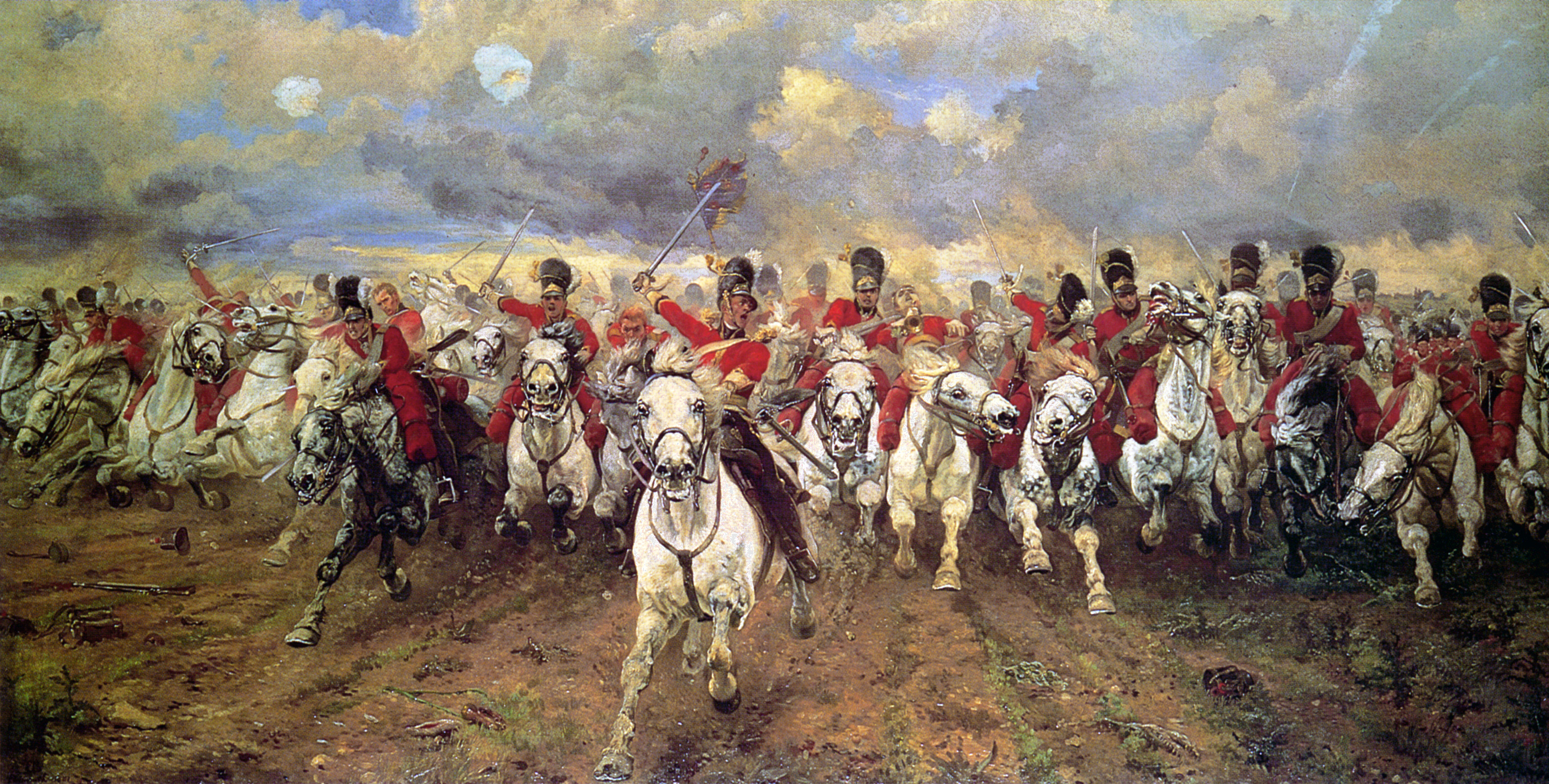
Posted: 23 June 2015 Filed under: Sue's News | Tags: Contributions, Education, military records, Waterloo Leave a commentIn the spirit of the bi-centenary of the Battle of Waterloo, I have been taking Southampton University’s MOOC presentation of “Wellington and the Battle of Waterloo“. It has informed my genealogical exploration of records in my latest contribution to Worldwide Genealogy: Who Fought at Waterloo?.
Learning all the time!
Reading Old Handwriting and Transcription Tools
Posted: 22 February 2015 Filed under: Sue's News | Tags: Contributions, old handwriting, palaeography, paleography, transcript, transcription, Worldwide Genealogy Leave a commentAn essential part of a genealogist’s work is reading old handwriting and making an accurate, faithful transcription for use in analysis.
Therefore my contribution to Worldwide Genealogy this month is A Transcription Toolbox.
Dutch October
Posted: 24 October 2014 Filed under: Sue's News | Tags: Appearances, Contributions, Dutch civil registration, Gaenovium, Worldwide Genealogy Leave a commentFollowing Gaenovium, the genealogy technology conference on 7 October 2014, I gave a brief report on Mondays with Myrt – 13 Oct 2014, at timestamp 10:00. After some exploration of newly discovered projects, I published more detailed thoughts at Gaenovium – Keys to Open Data and Open Standards.
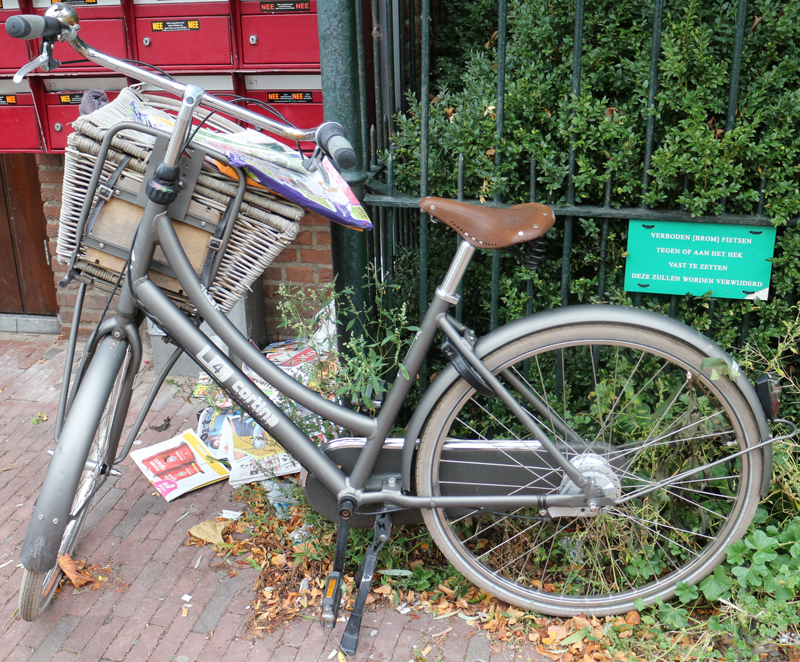
Ubitquitous in Leiden, the bicycle aka. fiets.
Travel is always stimulating, so inspired by the city of Leiden, this month’s contribution to Worldwide Genealogy examines an important group of starter records for those with Dutch ancestry in Going Dutch, starting with Civil Registration.
© Sue Adams 2014
Technical momentum – Gaenovium and FHISO
Posted: 2 October 2014 Filed under: Sue's News | Tags: Appearances, catalogue, Contributions, Gaenovium, Quality criteria, Worldwide Genealogy Leave a commentIt is a busy time in the world of genealogy technology.
On 7 October 2104, Gaenovium, a conference “exclusively for academics, developers and visionaries at the forefront of genealogy technology” takes place in Leiden, The Netherlands. I have been wanting to meet and exchange ideas with just such a group of people for some time. The arrival of my renewed passport this week gives me the final green light.
The Family History Information Standards Organisation (FHISO) has also been active recently, as I reported on my regular monthly slot at Worldwide Genealogy, with FHISO is back in action. User input needed.
The role of the archival catalogue as a fundamental research tool is a theme to which I keep returning. Efficient, accurate resource discovery whether online, in a physical archive or in my personal archive, is essential. In Criteria for Assessing the Quality of Genealogy Websites and Online Data, I stated that the catalogue was the most important feature of genealogical websites that offer access to digital copies of original records. In Provenance of a Personal Collection – Archival Accession, Arrangement and Description, I demonstrated the use of a prototype archival-style catalogue in support of a piece of genealogical research.
© Sue Adams 2014
Who was your family Snapper or Shutterbug?
Posted: 22 August 2014 Filed under: Sue's News | Tags: Alberton High School, Contributions, Family photographers, photographic technology, shutterbug, snapper, Worldwide Genealogy Leave a comment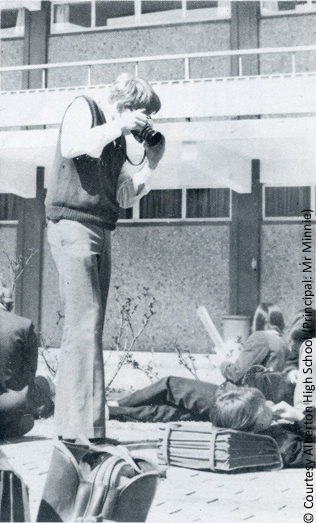
“The Snapper snapped”. Candid Camera. Alberton High School magazine 1979. p. 11. [Photograph depicts Stephen Adams at Alberton High School, 35 Phantom Street, Randhart, Alberton, Transvaal, South Africa]


 Family Folk